Fleet card providers vary significantly in network coverage, features, pricing structures, rewards programs and support capabilities. Selecting the right provider requires evaluating how well each option aligns with specific operational needs and fleet characteristics. Understanding key evaluation criteria helps businesses make informed decisions.
Evaluate earnify™fleet card capabilities against your operational requirements.
Network coverage determines whether drivers can conveniently access fuel stations along their routes, making acceptance locations one of the most critical factors when selecting a fleet card provider.
Acceptance Network Coverage
Network coverage determines whether drivers can conveniently access fuel stations along their routes. Providers with limited networks force drivers to detour for approved stations, potentially wasting fuel and time. Extensive networks provide flexibility and convenience.
Businesses should evaluate network coverage in their primary operational areas. A provider with 10,000 nationwide locations might have poor coverage in specific regions where your fleet operates. Geographic analysis of network density in relevant areas matters more than the total number of locations.
Regional vs. National Coverage
Local or regional fleets need strong coverage in their operating areas. National or long-haul operations require broad geographic distribution. Providers specializing in specific regions might offer better local coverage than national competitors.
Brand Availability
Some providers partner with specific fuel station brands. Others offer universal acceptance across multiple brands. Businesses with brand preferences or existing supplier relationships should verify provider compatibility.
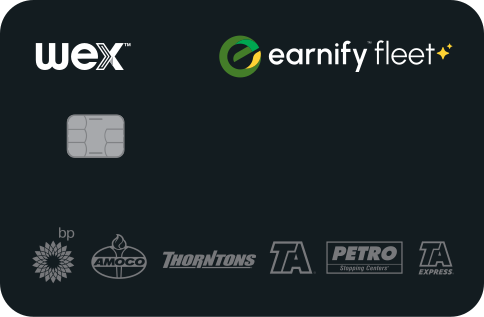
When you choose an earnify™fleet card, you gain access to in-network fuel rebates at bp, Amoco, Thorntons, TA, Petro and TA Express gas stations. Notably, earnify™fleet cards are accepted at 95% of U.S. fuel stations.
Reporting and Management Capabilities
Provider management systems vary in sophistication and usability. Some offer basic transaction lists. Others provide comprehensive analytics, customizable reports and advanced data visualization.
Businesses should evaluate whether reporting capabilities match their analysis needs. Small fleets might need only basic expense tracking. Large operations typically require detailed analytics supporting complex management decisions.
Real-Time Data Access
Real-time transaction visibility allows immediate monitoring. Delayed data updates limit management effectiveness. Most providers offer near-instant posting of transactions to management dashboards.
Custom Report Creation
Standard reports address common needs, but unique operational requirements may require custom reporting. Providers offering flexible report creation capabilities provide greater analytical value.
Purchase Control Features

Purchase controls help prevent unauthorized spending and fuel misuse. Providers offer varying levels of control sophistication, from basic transaction limits to comprehensive restriction systems.
The earnify™fleet cards purchase controls can help businesses enforce spending policies automatically.
Control Options Available
Evaluate what restrictions each provider supports. Transaction amount limits, gallon limits, time-of-day restrictions, day-of-week limitations, product-level controls (fuel-only), geographic restrictions and driver PIN requirements all contribute to effective spending management.
Ease of Control Configuration
Controls only work when businesses implement them. Providers with intuitive control setup interfaces encourage proper use. Complex or difficult-to-configure systems often go unused, negating their protective value.
Fuel Savings Program
Fleet card savings programs vary in structure and value. Some providers offer per-gallon rebates. Others provide network discounts. Some combine multiple savings mechanisms.
Businesses should calculate potential savings based on their actual fuel consumption patterns. A generous rebate program with limited network coverage might deliver less value than modest rebates available at convenient locations.
Rewards and Loyalty Programs
Strategic fleet managers often look for multifaceted fuel rewards programs that provide value to both the company’s bottom line and their drivers. Consider looking for a rewards program offering additional per gallon savings for a business as well as personal loyalty points that extend to drivers. An effective rewards or loyalty program serves as a no-cost driver retention effort. And since business owners managing fleets ultimately want their drivers to fuel at in-network locations due to standard fuel rebate savings, a rewards program encouraging drivers to fuel in-network supports business goals and saves money all while drivers earn loyalty points. Combining real fuel savings for the business with driver loyalty perks transforms a standard expense into a powerful advantage for fleet operations.
Fee Structures and Total Cost
Fleet card programs may include fees such as monthly account fees, per-card fees, transaction fees, statement fees, or late payment charges. Some providers charge no fees. Others have complex fee schedules.
Businesses should calculate the total cost of ownership by adding all fees and subtracting fuel savings to determine the net value. The lowest-fee option might not deliver the best overall value when savings programs are taken into account.
Hidden Fees and Charges
Carefully review fee disclosures. Some providers charge fees for services, while others include them without additional cost. Replacement card fees, expedited shipping charges or report generation fees can add up over time.
Customer Support and Service
Quality customer support becomes critical when issues arise. Providers vary significantly in the availability of support, responsiveness and the effectiveness of problem resolution. Consider your options for availability and communication channels.
Support Availability
24/7 support helps when problems occur outside business hours. Providers with limited support hours force businesses to wait for resolution during operational downtime.
Support Channel Options
Phone, email, chat and self-service portal options provide flexibility. Multiple contact methods typically result in faster issue resolution than single-channel support.
Integration Capabilities
Fleet cards integrating with existing business systems deliver greater value than standalone solutions. Integration reduces duplicate data entry and improves workflow efficiency.
Accounting Software Integration
Direct integration with QuickBooks, Sage or other accounting platforms streamlines financial record-keeping. Providers should offer data export in formats compatible with your accounting system.
Fleet Management System Compatibility
Businesses using fleet management software should verify whether a provider’s fleet card data integrates with existing systems. Seamless integration between fuel cards and fleet management tools maximizes operational visibility.
Mobile App Functionality
Mobile apps extend management capabilities beyond desktop computers. App quality varies significantly across providers. Some offer comprehensive functionality. Others provide limited mobile access.
Businesses should evaluate whether mobile apps include real-time transaction viewing, spending alerts, notifications, card activation, card deactivation, control configuration, report generation, data exports and driver communication tools.
Security Features and Fraud Protection
Security capabilities help protect against unauthorized use and fraud. Providers should offer driver PIN authentication, real-time fraud monitoring, instant card deactivation, transaction alerts, encrypted data transmission and detailed audit trails.
Purchase controls help prevent unauthorized spending and fuel misuse.
Contract Terms and Flexibility
Contract terms vary from month-to-month agreements to multi-year commitments. Long-term contracts might offer better pricing but reduce flexibility. Businesses should evaluate whether contract duration aligns with operational planning horizons.
Provider Reputation and Stability
Established providers with strong track records offer greater stability than new or financially unstable companies. Businesses should research provider reputation through customer reviews, industry ratings and financial stability indicators.
Scalability for Growth
Businesses planning fleet expansion should confirm if a provider can accommodate growth. Account management systems should handle increasing transaction volumes and additional cards without performance degradation.
Making the Final Decision
Choosing the right fleet card provider requires thorough evaluation of acceptance networks, reporting capabilities, purchase controls, customer support, fee structures, savings programs, integration options, and security features. Each business has unique priorities based on fleet size, operational patterns, and management requirements. Taking time to assess how well each provider aligns with specific needs typically results in better long-term satisfaction and value. The right provider becomes a strategic partner supporting fleet operations and financial management.
Visit earnifyfleet.com and see if an earnify™fleet card is right for you.